
Picture this nightmare: You spent months organizing your dream wedding or milestone corporate gala. The clock strikes 6:00 PM, guests flood through the front doors, and absolute chaos strikes. The sound system produces an ear-piercing screech, the appetizers sit frozen in an unheated pantry, and nobody knows where the centerpiece tables went.
Suddenly, instead of sipping champagne and chatting with VIPs, you are frantically crawling under tables with extension cords while hunting down extra folding chairs.
Does that sound like fun? Definitely not.
Events create lifelong memories, but orchestrating them requires dozens of moving parts. This is exactly where professional event vendors enter the picture. Whether you are throwing an intimate backyard bash, a multi-day conference, or an oceanfront wedding, knowing what event vendors do—and why you cannot afford to skip them—will make the difference between a disaster and an unforgettable masterpiece.
Let’s demystify event vendors, uncover the industry data behind their magic, and reveal why your next celebration desperately needs them.

What Exactly Is an Event Vendor?
In simple terms, an event vendor is an independent professional, agency, or business hired to supply specialized services, products, or equipment that bring an event to life.
Think of an event as a Broadway production. While the host or planner acts as the producer steering the ship, the vendors are the specialized cast and technical crew making the performance work behind the scenes.
The Most Common Types of Event Vendors
Event vendors span dozens of creative, technical, and hospitality disciplines:
- Catering & Mobile Food Trucks: Chefs, bartenders, baristas, and food truck operators who handle menu curation, cooking, food safety, and beverage service.
- Audio/Visual (A/V) & Lighting Techs: Sound engineers, projection specialists, and lighting designers who ensure every keynote speech is crisp and the dance floor atmosphere stays electric.
- Photography & Videography: Visual storytellers equipped with high-end lenses, lighting rigs, and drones to capture raw, emotional moments.
- Floral & Design Creatives: Florists, tablescape artists, and balloon stylists who transform blank industrial spaces into magical wonderlands.
- Party Rentals & Infrastructure: Companies that provide tents, staging, generators, portable luxury restrooms, dinnerware, and furniture.
- Live Entertainment: DJs, brass bands, soloists, emcees, and interactive entertainers who control the crowd’s energy.
- Planners & Day-Of Coordinators: The tactical masterminds who build production timelines, handle logistics, and command all other vendors on-site.
Event Vendor Budget Estimator
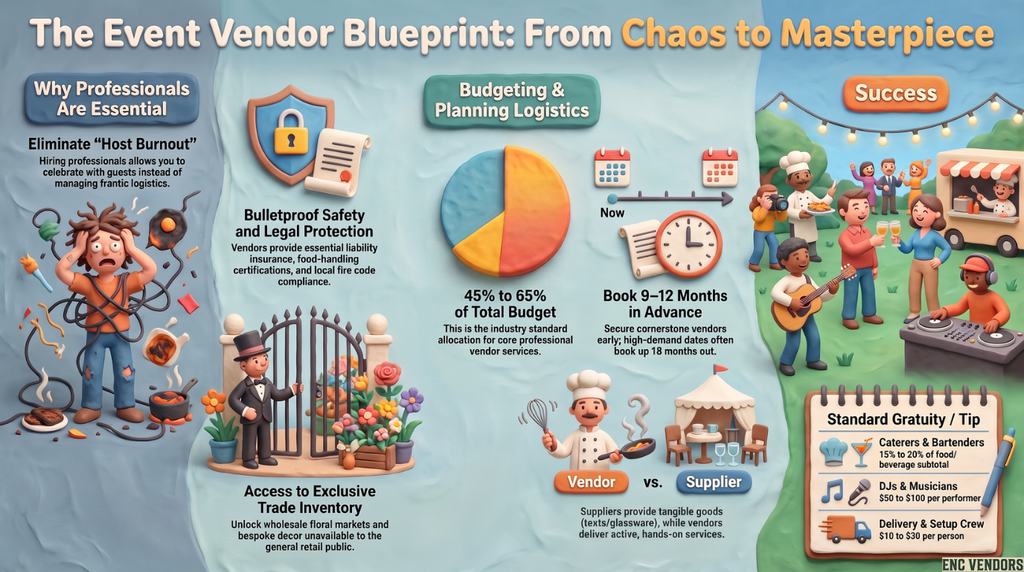
Industry data shows 45% to 65% of your total event budget goes toward core vendors. Dial in your numbers below to see your recommended target spends.
| Vendor Category | % of Total | Target Budget | Action |
|---|
Why Every Single Event Needs Professional Vendors: 7 Game-Changing Benefits
Are you tempted to cut corners with DIY solutions? Before asking your cousin to DJ from an iPhone or attempting to cook 150 chicken breasts in your kitchen, consider these crucial advantages that vendors bring to your gathering.
1. Relief From Crushing Host Burnout
Did you know event coordination consistently ranks among the top ten most stressful jobs in the world? Attempting to manage logistics while playing gracious host is an impossible tightrope. When you hire vetted pros, you buy back your peace of mind. You get to step out of the manager role and actually celebrate alongside your guests.
2. Deep Technical Expertise and Seamless Problem Solving
Seasoned vendors have experienced every conceivable catastrophe: sudden rainstorms, blown circuit breakers, spilled sauces, and delayed flights. When a crisis strikes, a seasoned professional does not panic. They carry backup generators, spare microphones, and contingency plans that fix the problem before your guests ever notice a glitch.
3. Bulletproof Legal Protection and Safety Compliance
Professional vendors carry commercial general liability insurance, food-handling certifications, and local municipal permits. If an uninsured friend drops an expensive speaker or causes food poisoning, the financial liability falls directly on your shoulders. Professional contracts protect your wallet and ensure full compliance with fire codes and city ordinances.
4. Trade Access to Exclusive Inventory and Wholesale Goods
High-end event decor is rarely available at your local department store. Professional vendors maintain trade accounts with wholesale distributors, floral import markets, and specialized rental houses. By partnering with them, you unlock access to bespoke lighting, farm-hewn tables, and exotic blooms that regular retail shoppers can never purchase.
Vendor Gratuity & Tipping Calculator
Tipping etiquette varies drastically across event categories. Select your vendor role to calculate the standard gratuity range based on contract subtotal or crew count.
Always check your contract first—many caterers already include an automatic 18%–20% service fee or gratuity line item.
5. Efficient Budgeting and Cost Avoidance
Many people assume that doing things yourself always saves money. In reality, buying dozens of tablecloths, chafing dishes, chafing fuels, and centerpieces adds up rapidly. Even worse, you get stuck storing or selling those items after the event. Vendors supply everything turnkey, helping you avoid retail markup and hidden waste. In fact, industry data shows that hosts typically allocate 45% to 65% of their total event budget directly to reputable vendors to guarantee flawless execution.
6. Flawless Event Flow and Guest Psychology
Professional entertainers and coordinators understand crowd pacing. An experienced wedding DJ knows precisely when to transition from romantic background melodies to high-energy dance anthems. A skilled catering manager knows how to feed 200 people in 30 minutes flat without creating bottlenecks at the buffet. That dynamic flow keeps guests smiling and engaged from start to finish.
7. Unmatched Aesthetic Polish
There is a distinct, tangible difference between a homemade celebration and an event styled by pros. Vendors understand spatial geometry, color balance, uplighting temperatures, and table proportions. They turn simple spaces into breathtaking, Instagram-worthy experiences that leave guests talking for years.
Interactive Vendor Booking Timeline
Never scramble at the last minute. Select your target celebration date to get a customized milestone schedule based on proven booking windows.
Frequently Asked Questions About Event Vendors
What is the difference between an event supplier and an event vendor?
While people often use the terms interchangeably, an event supplier typically provides tangible goods or equipment (like tent structures, tables, linens, or glassware). An event vendor usually delivers an active, hands-on service during the event (such as catering, live musical performance, photography, or bartending). Many modern event companies act as both.
How much should I tip event vendors?
Tipping practices depend on vendor type and contract specifics:
- Caterers & Bartenders: 15% to 20% of the food and beverage subtotal (always double-check whether gratuity is already factored into your service fee).
- DJs & Live Musicians: $50 to $100 per musician or entertainer.
- Hair & Makeup Artists: 15% to 25% of the total service invoice.
- Delivery & Setup Crews: $10 to $30 per person for heavy lifting.
- Business Owners: Tipping is optional for sole proprietors, though glowing 5-star reviews and personal thank-you notes are always appreciated!
How far in advance should I book vendors?
Book your cornerstone vendors—such as the venue, lead photographer, and caterer—9 to 12 months ahead of your event date. For peak holiday dates and popular wedding months (May, June, September, and October), high-demand vendors routinely book out 14 to 18 months in advance.
Can I coordinate an event without any vendors at all?
You can self-manage an informal get-together for 10 to 15 people without external support. However, once your guest count tops 30 to 40 people, self-catering, cleaning, entertainment, and logistics quickly overwhelm the host. Hiring even two key vendors—such as a caterer and an audio rental team—dramatically improves the guest experience.
4 Tough Questions to Ask Before You Sign Any Vendor Contract
- “Are you fully licensed and carrying commercial general liability insurance?” Never compromise here. Reputable venues will not allow uninsured vendors on their property.
- “What is your emergency backup plan if you fall ill on event day?” Established photographers, DJs, and coordinators maintain trusted networks of replacement peers who can step in on short notice.
- “What specific equipment, power, and space requirements do you need from the venue?” Clarifying power draw, loading dock access, and setup timelines prevents costly venue penalty fees.
- “What are your cancellation, postponement, and deposit refund policies?” Ensure your contract clearly spells out what happens in the event of severe weather or unforeseen cancellations.
Conclusion: Build Your Dream Team and Enjoy the Party
An extraordinary celebration never happens by luck. Behind every unforgettable wedding toast, electric dance floor, and polished corporate launch stands a dedicated crew of skilled event vendors pulling the strings.
When you invest in seasoned professionals, you are not simply hiring someone to take photos or plate dinner. You are buying freedom, flawless execution, and the priceless gift of being fully present with your favorite people.
Ready to make your upcoming gathering effortless? Start researching, vet your local vendor community early, and assemble a dream team that turns your creative vision into pure reality!
Comments